Introduction
Mining waste results from the extraction and processing of valuable mineral resources. It is worth noting that mining waste captures and sequesters excess carbon dioxide through carbon mineralization. Processing of discarded mine tailings not only offsets greenhouse gas emissions but also embraces automation technologies to reduce operational inefficiencies, consequently optimizing production and curbing emissions.
Nevertheless, adopting short- and long-term environmental monitoring strategies can empower companies to oversee and control mining waste vigilantly. In an industry now more deeply committed to ecological, social, and governance compliance than ever, such monitoring approaches may become increasingly crucial.
Failure to efficiently manage mining waste at a national level could potentially lead to detrimental changes in the social and environmental landscape of mining regions. Effective waste management in mining is indispensable for ensuring the long-term stability of waste disposal facilities.
Сomposition of mining waste varies from location to location and hinges on factors such as geographical structure, ore value, and prevailing market demand for minerals. Nevertheless, the underlying power dynamics persist irrespective of the mine’s location or nature of the processed commodities. Despite the sector’s significant contributions, including generating employment opportunities and substantial revenue, mining activities can sometimes strain the relationship between mining companies and local communities.

As the world’s demand for minerals shows no sign of diminishing, nations and corporations must exercise greater vigilance than ever in their approach to waste management. In this article, you will learn about various types of mining waste, mine waste dump management methods and technologies, and how M HEAVY TECHNOLOGY experts can meet your needs to strengthen your waste dump management in mining.
Types of Mining Waste
1. Solid Mine Waste
Overburden or Waste Rock:
This term pertains to the extensive volume of initial soil and rock that must be excavated to access mineral deposits. Typically, approximately five tons of overburden need to be removed to extract a single ton of ore. Overburden mining doesn’t undergo any chemical treatment, but it still necessitates removal to reach the mineral ores. One approach to managing overburden is to stack it on the nearby surface of the mining site, away from ongoing operations.
Gangue
Gangue refers to the rock waste that is intermixed with valuable minerals and requires processing. The separation of minerals from gangue is referred to as mineral processing. Gangue often necessitates multiple reprocessing cycles to extract all minerals, as some minerals may be overlooked during the initial processing.
Mine Tailings:
Mine tailings consist of finely ground rocks and mineral waste resulting from mineral processing. They may contain concentrations of processing chemicals, posing environmental concerns. Proper transportation and disposal of mine tailings are crucial. Mine tailings are transported using slurry pumps to tailing ponds, which are containment areas enclosed by dams designed to capture and store waste.
2. Liquid Mine Waste
Mine Water:
Mine water is generated in various ways at mining sites and can exhibit varying contamination levels. Water exposed to different mining processes is often acidic and can contaminate local water sources, leading to a phenomenon known as acid mine drainage, contributing to water pollution. Careful water monitoring at mining sites and developing mine water management strategies are essential to reduce the volume generated. Treatment of this water is necessary before release into the environment.
Read more on mining wastewater treatment.
• Sludge:
Similar to mine wastewater, sludge is produced at some mining sites. The key distinction is that sludge contains added solids and processing chemicals. Sludge holds little economic value, so it is treated as waste. If the sludge contains hazardous or radioactive materials, it may be categorized as hazardous waste, necessitating special handling and disposal procedures.
Check out industrial wastewater treatment services from M HEAVY TECHNOLOGY.
Mining Waste Management Methods
Waste management in the mining industry faces intense scrutiny from local governments and the public, driven by a history of improper disposal methods and associated environmental damage. It has created a negative perception of mining and its waste practices. Many countries now require mining companies to develop comprehensive mine waste storage proposals as a prerequisite for obtaining permits to address these concerns. These proposals aim to ensure long-term storage stability and regulatory compliance, mitigating the risk of environmental violations.
Mining operations generate vast amounts of waste, prompting innovative waste management techniques. The industry actively recycles its waste, using overburden for reprocessing, land contouring, and construction aggregates, while mine tailings are repurposed to produce various materials. Mine water is treated and repurposed for dust suppression, agricultural/industrial use, and cooling.

Despite recycling efforts, significant waste is stored in facilities or waste sites, necessitating robust, long-term storage methods compliant with evolving regulations. Engineers must design storage solutions capable of withstanding catastrophic events like floods, storms, and earthquakes for extended periods, often spanning centuries, ensuring stability and safety.
Waste Disposal
In the ore treatment refining plant, processing ores often involves grinding, water addition, and the use of chemicals. A significant portion of the resulting waste exits the plant as a slurry, with the excess water being returned to the plant. Gangue and other rock waste are managed by storing them in waste piles or at the base of tailings dam embankments. Most waste rock is initially held at its source. Coarse coal refuse is separated from the preparation plant and placed in large piles or banks. Tailings are disposed of through various methods, including pond storage, dry stacking, underground deposition, or ocean disposal, depending on their characteristics, necessitating careful selection of the appropriate disposal method.
Overburden Handling
Effective overburden management involves backfilling it into the excavated mine area. Overburden dumps are often reclaimed with tree species to enhance soil pH, moisture levels, and overall nutrient content. It’s crucial to excavate a new pit only after the depletion of an existing one. Proper stacking and compaction of overburden should be ensured, along with maintaining the dump’s height and slope to prevent accidents. Additionally, drainage considerations are essential to manage heavy rainfall.
• Recycling
Mining waste materials offer opportunities for recycling within the industry. Reprocessing can recover additional minerals, or they can be utilized for internal construction purposes. Mine waste materials find applications in constructing impoundments and haul roads. Specific tailing waste may serve as granular base/subbase, flowable fill aggregate, engineered fill/embankment, or asphalt aggregate, contributing to sustainable resource utilization.
What is The Most Efficient Method in Your Case? Find Out the Best Solution With Our Experts.
Technologies Used in Mine Waste Management in 2023 and Beyond
Tailings Management Systems
Geosynthetic Liners
Water Recycling and Treatment
Data Analytics and Predictive Modeling
Reducing Waste Generation
Ecological Rehabilitation
Regulatory Compliance and Best Practices
Successful Projects of Mining Waste Management.
Project 1
Project year: 1995
Location: Germany
Project goal: Optimization of the process of underground transportation of iron hydroxide (Fe(OH)3)
Pumped medium parameters:
- Density: 1,2 kg/dm3;
- Kinematic viscosity: 17 mm2/h.
Parameters affecting the project:
- Minimum flow rate in the discharge line;
- Suspension density and associated viscosity;
- Transportation line to the embankment;
- Transportation line inside the mine;
- Starting and operating pressure.
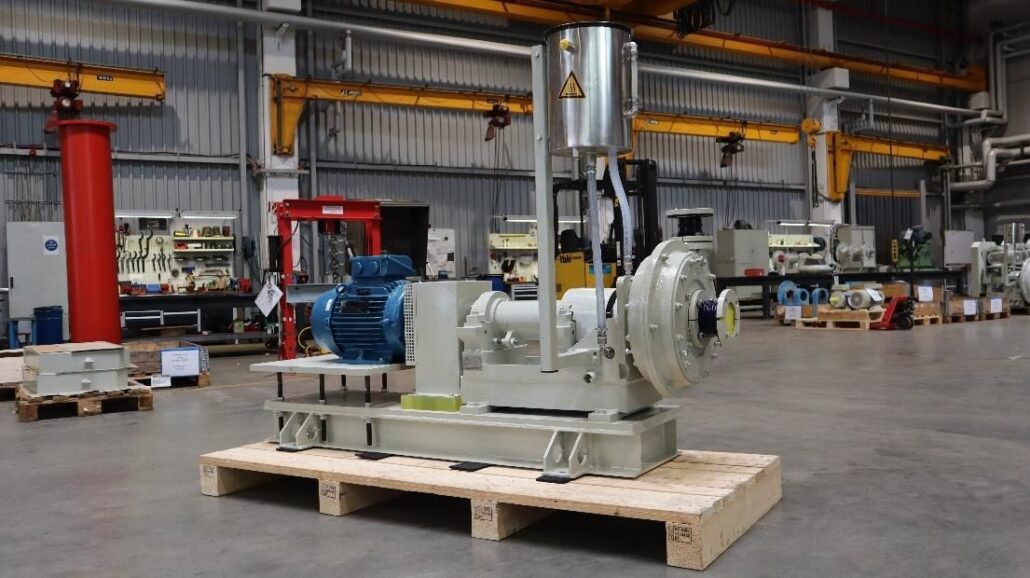
Manufacturer of pumping equipment: Habermann Aurum Pumpen GmbH.
Parameters of selected pumping equipment:
- Performance: 21-22 m3/h;
- Head: 27,5 m H2O;
- Power consumption on the pump shaft: 7,55 kW by density of 1,17 kg/dm3;
- E-motor power: 18,5 kW;
- Rotation speed of the motor: 1450 r/min.
Features of pumping equipment:
- External pump casing made of durable cast iron;
- Internal parts in contact with the pumped medium: inner casing, impeller, armored disks on the pressure and suction sides, coated with elastic polyurethane APFlex® 1001.
The service life of the equipment: 27 years.
Project 2
Project year: 2006
Location: Belgium
Project goal: Pumping salt brine in an underground mine
Pumped medium parameters:
- Density: 1,2 kg/dm3
Parameters affecting the project:
- Creation of high pressure of 9 bar for pumping brine;
- Aggressive medium.
Manufacturer of pumping equipment: Habermann Aurum Pumpen GmbH.
Parameters of selected pumping equipment:
- Performance: 72 – 90, 110 m3/h;
- Head: 34, 32, 115 m H2O;
- Power consumption on the pump shaft: 64,6 kW by density of 1,2 kg/dm³;
34 – 32 kW by density of 1,25 кг/дм³;
- E-motor power: 22, 75 kW;
- Rotation speed of the motor: 1460, 2840 r/min.
Features of pumping equipment:
- Сasing material: wear-resistant and tempered steel with a strength of 650HB.
The service life of the equipment: till now.


Valves
Project year: 2022
Location: Ukraine (“YuGOK” LLC)
Project goal: Construction of a pulp concentration complex for the iron ore mining and processing plant
Medium parameters:
- Solids content in the pulp: 40 %;
- Max pressure: 16 bars.
Parameters affecting the project:
- Highly abrasive medium;
- Previously installed valves from another manufacturer failed during the commissioning of the facility without completing the warranty period.
Manufacturer: Habermann Aurum Pumpen GmbH.
Valves parameters:
- Type: knife-gate valve;
- Dn 900;
- Casing: carbon steel;
- Gate valve material: stainless steel 17.4PN [H900];
- Sleeve material: carbon steel with wear-resistant weld overlay;
- Seat: Urethane;
- Leakage class: А.
The service life of the equipment: till now.

CONCLUSION ON THE PROJECTS PRESENTED.
Made project solutions and supplied equipment are reliable and efficient; they are operated without any customer complaints, which indicates high quality and durability. Due to these characteristics, the implemented projects have become a reliable foundation for the sustainable development of production processes at the enterprises. It not only reduced operating costs but also helped reduce environmental impact, making the project more environmentally sustainable.
Author of the article: Mykhailo Blazhko
Get an Audit on Your Mining Waste Management or One of Its Processes and Find Out What Slots of Improvement You Have.