In September 2023, a significant milestone was achieved at the Kametstal Steel Plant with the successful commissioning of Hot-Blast Stove No4 (HBS No4) of the blast furnace BF No1M after a substantial overhaul. This modernization reflects the progressive strides in steel technology. The meticulous overhaul of AH No.4 was carried out by “M HEAVY TECHNOLOGY” during 2020 and 2021.

Goals of Hot Blast Stove Repair
The primary objectives of this repair were manifold:
- Direct repair of the hot blast stove, a pivotal component of hot blast stoves, to ensure the efficiency of blast furnaces.
- Augmenting the durability and resilience of the combustion chamber to withstand the intense conditions of steel making.
- Elevating the temperature of the hot blast, with or without high-calorific additives, to guarantee efficient iron ore processing.
- Amplifying the efficiency of blast furnace gas combustion to optimize the furnace output.
Ask For a Piece of Advice on How to Boost the Energy Efficiency of Your Manufacturing with Hot Blast Stove Modernization.
Challenges of Hot Blast Stove
A brief recapitulation: HBS No4, a crucial part of the blast furnaces system, was a product of 1970s engineering. This hot-blast stove, characterized by its shaft type with an internal combustion chamber, exhibited several significant drawbacks:
- “Short-circuiting” or direct gas flows between the combustion chamber and the packing chamber due to fissures and seams in the partition wall, affecting the efficiency of the hot blast stoves.
- The notorious “banana” effect, where the combustion chamber tilts towards the packing, transforms the cold blast air into hot blast air.
- High-temperature creep of refractories under extreme temperatures and pressures in the lower part of the combustion chamber, leading to deformation and the eventual collapse of the masonry, especially the hot blast tuyeres.
- Pulsating combustion due to the tall combustion chamber’s acoustic excitation affects the burning efficiency.
- Cracking of refractories in the lower part of the combustion chamber (near the burner installation) could potentially halt the blast furnace operations.
Indeed, all these drawbacks were vividly observed in HBS No4, impacting the production of hot metal and pig iron, the primary products of blast furnaces.

Hot Blast Stove Modernization Process
CFD Modeling
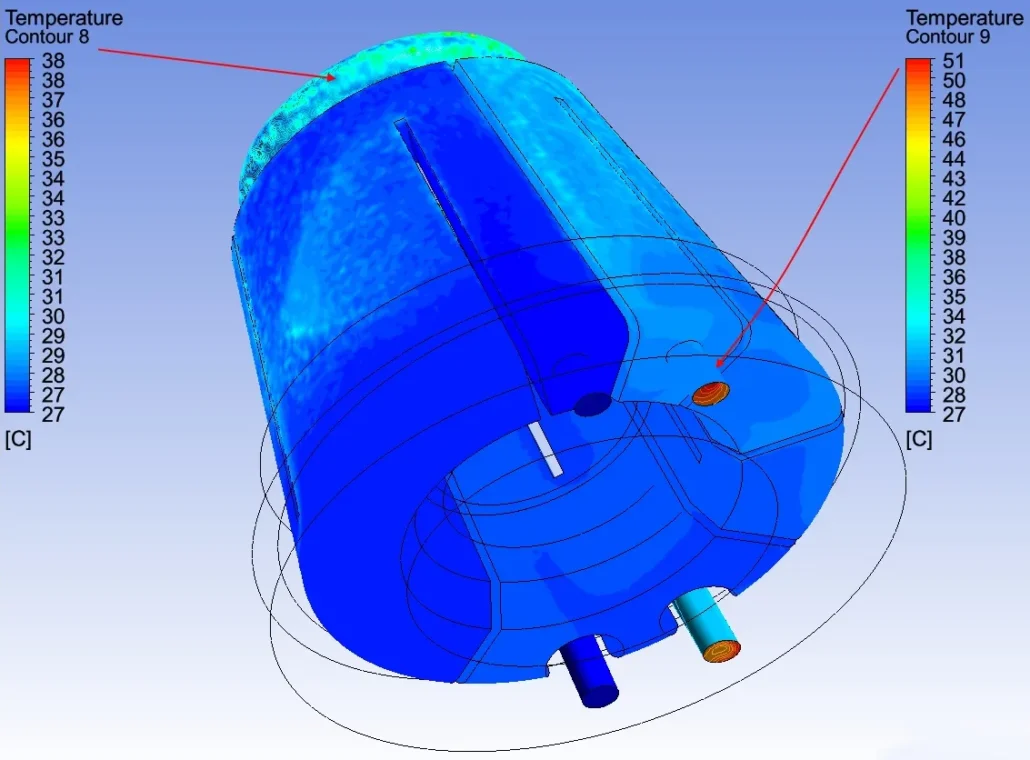
Embarking on the overhaul project for HBS No.4, our team utilized the CFD software suite for computer modeling. This phase involved the examination of two combustion chambers, “oval-shaped” and “lentil-shaped,” with a classic “pipe-in-pipe” burner. The analysis unearthed significant drawbacks like uneven temperature distribution and vortex wall-bound combustion of the blast furnace gas-air mixture, which could lead to waste gas emissions.
Benefits of Switching the Burner Type
Introduction to the Ceramic Burner
A shift from the standard “pipe-in-pipe” burner to a ceramic burner was proposed to surmount these challenges, especially when the blast furnace was stopped. With its axial flame position in the combustion chamber, this burner promised better control over the air blast and gas mixtures.
Improved Flame and Temperature Distribution
Computer modeling demonstrated that the ceramic burner generates an elongated flame, ensuring the maximum temperature is transferred to the upper part of the combustion chamber. This is a crucial factor for efficient iron and steel production, where the hot blast air plays a pivotal role.
Reducing Refractory Creep Deformation
A significant advantage of this transition is reducing the harmful effects of refractory creep deformation, which enhances the efficiency and longevity of the hot blast stoves.
Extended Combustion Chamber Lifespan
Adopting the ceramic burner is also anticipated to extend the combustion chamber’s lifespan, among other benefits, contributing to the modern blast furnace’s overall efficiency.
Checkerwork Blocks Change
Furthermore, this project saw the replacement of the “packing” with a cell diameter of 40 mm with a diameter of 30 mm. This strategic change augments the heat exchange area of the hot-blast stove, elevating the cold blast to a hot blast temperature and reducing coke consumption in the blast furnace. A foreign company’s ceramic burner was employed in this project, bringing in a wealth of experience from similar projects executed abroad. The combustion chamber’s interior was coated with the same company’s modern, more durable refractories to extend its lifespan.

Results of Hot Blast Stove Modernization
This project tackled critical issues:
- Extending the combustion chamber’s lifespa
- Elevating the hot blast temperature
- Optimizing fuel usage
We are optimistic that further observations of the now-operational BHS No4 will validate the decisions made and implemented, marking a significant leap in steel plant efficiency and output.
The modernization carried out by M HEAVY TECHNOLOGY aims at maximizing the efficiency and lifetime of existing hot-blast stoves with minimal expenses while also enhancing the environmental and economic performance of the units. Using a ceramic burner improves air and gas mixing, ensuring more complete combustion and higher calorific capacity. The flame of the ceramic burner, with its strictly vertical trajectory, prevents local overheating and burning, significantly increasing the HBS resistance and thermal efficiency. Replacing existing checkerwork blocks with conical channel diameters of 30 and 20 mm almost doubles the heating surface area of the checkerwork, further contributing to the project’s goals. M HEAVY TECHNOLOGY provides a full range of design services for both reconstruction and new construction of the entire HBS block and individual stoves, marking a significant stride in steel technology and modern blast furnace operations.
Check out blast furnace design services from M HEAVY TECHNOLOGY.
How Much Can You Save By Adding Energy-Effective Technologies To Your Manufacturing Cycle?